 |
| Authentic Tonkotsu Ramen in NYC |
Just as pizza came to America from Italy, the ramen noodle came to Japan from China. Rather than destroying their import the way Americans did to pizza (ie, Dominos ), however, the Japanese perfected it. If you've ever seen the film Tampopo, (a must see for any foodie), you know that doing so is a daunting task for any chef. The texture of the noodles, the tenderness of the meat, the depth of the broth...each component is a crucial element to this delicate everyday dish. And given the ramen craze that has swept NYC over the past few years, it seems like Americans have begun to get just how meticulous it is to prepare. The two hour wait at Ippudo and Totto Ramen are evidence. In Japan, however, there are just as many ramen stalls as there are pizzerias here, and the average patron would balk at paying upwards of $10 per bowl. Perhaps this has to do with the fact that their instant ramen from Japan, if prepared correctly, can be incredibly delicious; the packaged ramen found on American supermarket shelves just doesn't compare. I was lucky enough to discover this when my boyfriend and I received a box of Hakata ramen Daruma from a friend who was visiting from Japan.
 |
| Hakata Ramen Daruma |
Hakata is a type of ramen which hails from north Kyushu and uses broth extracted from tonkotsu, or pork bone. It has a creamy consistency and deep pork flavor as a result of boiling pork bones, fat, and collagen over high heat for many hours. The box of Daruma ramen claims that combining the ingredients within will result in an authentic, slow cooked flavor. If you follow the instructions carefully, as we did, you will indeed have yourself some amazing ramen.
According to my fiancee, who shares the same birthplace as this type of ramen, "It tastes like Japan!"
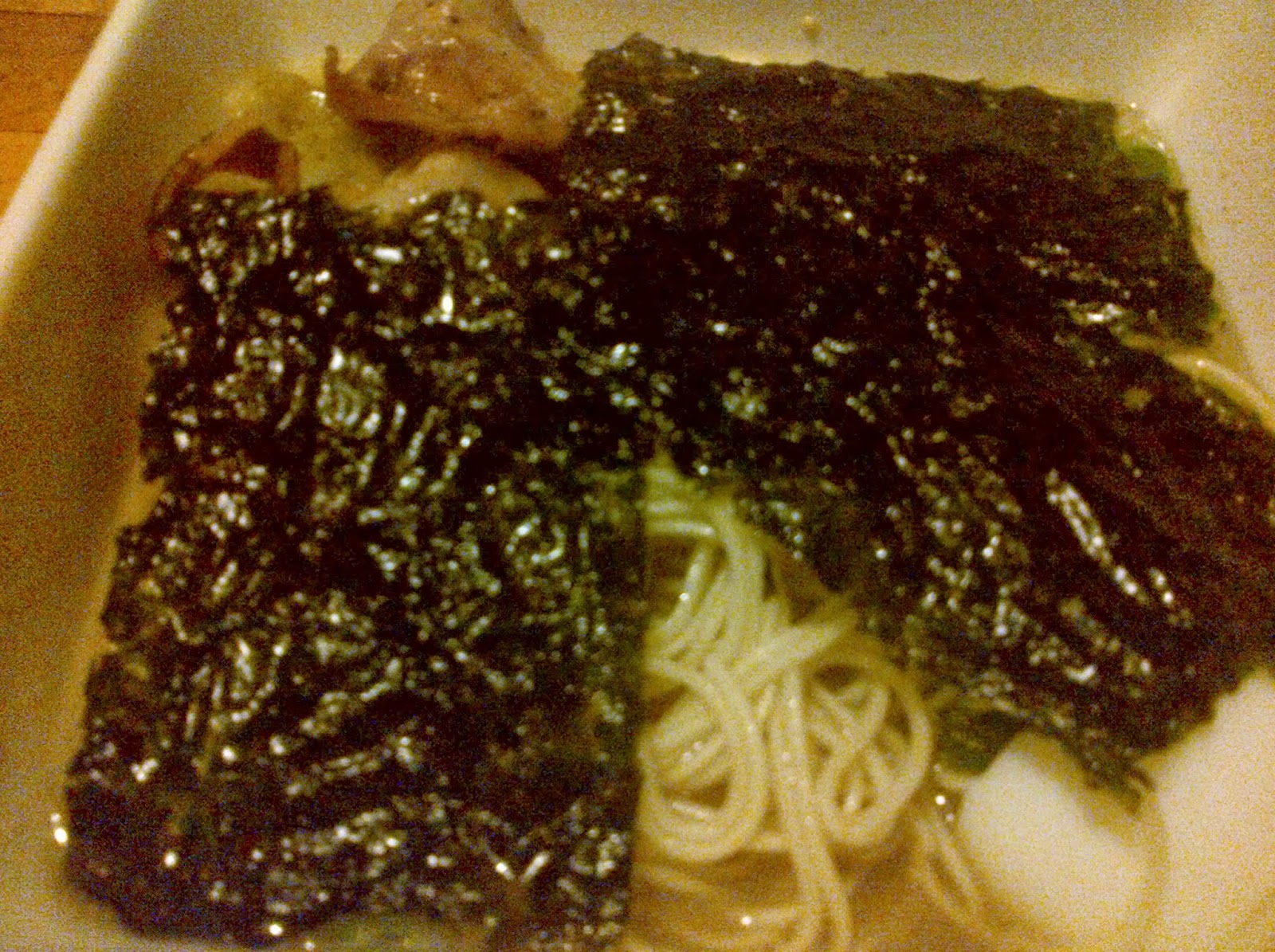 |
| Our finished Hakata ramen, with pork and seaweed |
The number one secret, which should be followed every time when preparing any type of ramen (including Nissin top ramen), is to boil the noodles separately from broth. The main reason for this is because when you cook the noodles, the preservatives from the package escape into the water. It's best not to combine this water with the broth. Also, don't overcook; al dente is best. When the noodles are done, remove from the water, let cool for a few minutes, and add to broth. Add scallion, egg, seaweed, and/or very thinly sliced pork as desired.
 |
| Next time, we added egg (tamago), cabbage, and scallion! |


